
Courtesy of EIFF.
Every year in the village of Carrbridge in the Scottish Highlands, a cooking competition takes place unlike many others. Contestants are made up of locals and those who travel extraordinary distances to take place in marrying the three ingredients of “oatmeal, water, and salt” with perfect ratio and technique to win “The Golden Spurtle” in the World Porridge Making Championships. Aussie director Constantine Costi’s feature length doc covers the competition with an artistic flair of carefully composed shots and intercut interviews that highlight the pastoral idyll of the village and unique characters of the event. We spoke to the Opera director slash filmmaker before the UK premiere of the film at Edinburgh International Film Festival 2025, discussing the project’s production and wider inspirations...
Is there a certain aspect that was a challenge because porridge is seen as a boring thing and with a documentary it’s trying to turn that into something interesting?
I mean and it’s definitely not the most exciting dish to even see me make. There’s no soufflé fire going, people screaming at each other in the kitchen. It’s quite slow and meditative. So I guess on one hand maybe that’s a sort of misguided thing to be attracted to in cinema but I like the challenge of making it interesting and worthwhile. I think ultimately the porridge competition itself is fun and joyful. So this was a Trojan horse for a story following these amazing characters.
How did you approach it first? Because there is almost a protagonist to the film.
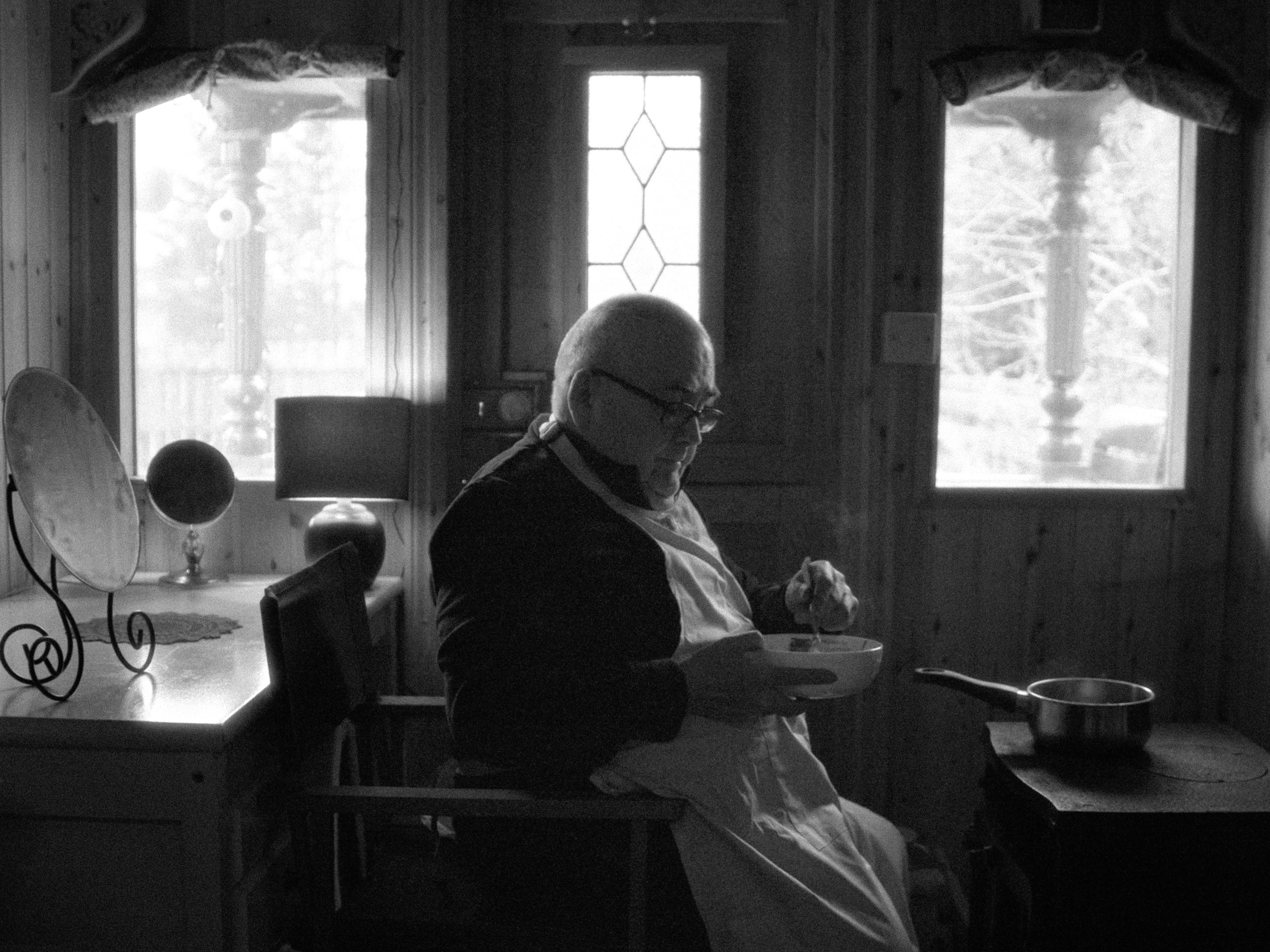
Totally. So it started with me meeting Charlie Miller, the chief of the competition. And he and I clicked in a very organic way, and I now consider him a dear friend. It was really sort of his story, against his will, having to let go of his position due to age and not being in the best health. And I thought that was a very bittersweet story to follow. Also seeing him, Charlie, almost as an artist in his own way using this competition as a canvas to do something joyful and absurd.
And what was the process of filming like?
We spent half the time filming and half the time having cups of tea in people’s houses. A very gentle, low-key, enjoyable process. I just got to know the village so well. There’s not many people there, so wasn’t very hard. In a sort of unexpected way, the rapport that we developed with the community really shines through. Everyone is quite comfortable on camera because we didn’t swan in with a massive crew and I got to know everyone quite well before we started documenting them.
Documentaries often use these talking head shots that are normally framed the same. The film has that but also long shots featuring the scenery and also the interesting angles. Were those unique aspects always intended?
Great to hear that we didn’t make sort of a churned out doco. The whole aesthetic was guided by the first time I went to the village: I went on my own and just became completely intoxicated by the kind of dream-like, almost picture book nostalgic feel of the whole place where I was like, “My god, is this even real?” And so we wanted to kind of give it this elevated painterly quality because that’s the sort of what it felt like to me going there as an outside to the other side of the world. So it was very driven by me trying to recreate the dreamy feeling I had when I first arrived.
Does that also feed into filming in the kind of squished Academy aspect ratio?
Definitely. I mean we wanted to sort of give it this sense of an old BBC doco in a way. I direct opera mainly. So I’m not the most experienced, a lot of the references I had for the team weren’t from the documentary world. Like even as far as Dylan Thomas’ radio play Under Milk Wood - which is kind of poetic, you know, Richard Burton narrating a piece from the 50s I think telling us the dreams of these Welsh villages. And I was like there’s something in this, giving it a kind of a scratchy gradient and something that could have been unearthed from the 1950s or now.
Would you say any of the aspects are operatic?
That’s my bread and butter. I just opened a Mozart in Melbourne four days ago. On paper, obviously you can’t think of anything more far from documentary than the opera, right? Like the opera is all about artifice. But I think in a way, my background in the theatre couldn’t help but reveal itself like a lot of the shots are indicative of sitting in a play where you don’t have the benefit of fast editing and everything. It’s all one image, one square.
And the score as well, we pay particular attention to the music with this composer, who’s an opera composer, Simon Brookard who’s from Melbourne. And he and I really wanted a live orchestra of a new composition to carry the narrative and the feeling along. yeah, so definitely that attention to music, I think, whether I like it or not, will always be a part of whatever I do even if it’s a porridge-making-film.
And in the UK, I think especially, we’re very into baking programmes or cooking programmes. I mean, there is scenes of tension in the film that are quite similar. Was any of that inspired by it?
You mean like Great British Bake Off that kind of thing? In a way, look, I think when you’re dealing with a porridge making competition, inherently, that’s just going to be the feeling of it. You know, this is not cutthroat UFC, right? There’s going to be a kind of a wholesome feeling to the whole thing. But I guess in such a turbo culture of media consumption, there actually is an unexpected gap and I think desire for people to watch things that are slower and more meditative and you can kind of take a breath and enjoy a bit of like wholesome optimism I think.
And documentaries are often made in the edit. Is there anything that changed?
So the big curveball that we had was, and this is sort of indicative of being in Carbridge and working with the people there, was that before I left to shoot the film, Charlie was telling me that he was really going to struggle to find someone to become the new chieftain when he had to retire.
And I thought the whole film was going to be about Charlie’s search for the new chieftain and interviewing people and working out who’s going to succeed and is there even anyone who can take the mantle?
So we went back expecting this to be a major narrative part of it and Charlie was like, “Oh no, it’s just Alan down the road.” I guess we have to roll with that. And then it became a more, in terms of the heart of the piece, a more philosophical and broader kind of story about Charlie’s journey throughout the film.