Courtesy of Tull Stories
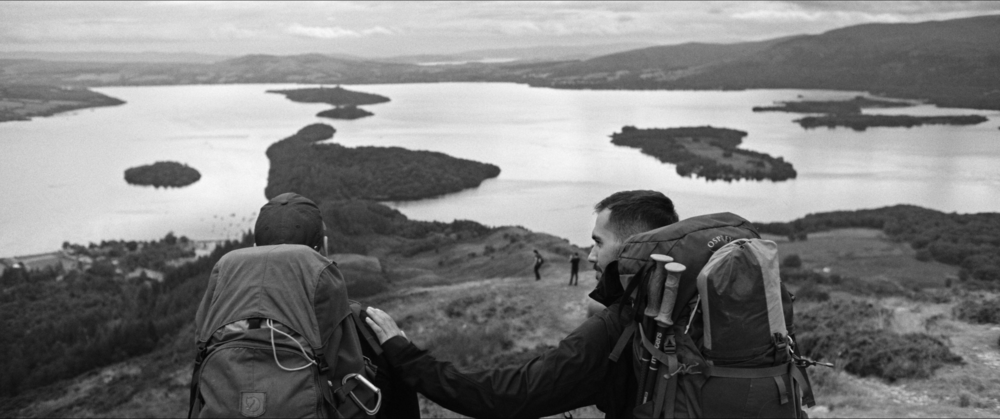
After losing contact for ten years, two friends embark on a 600km trail through the Highlands. The steady pace of ‘The North’ is nothing to complain about with when stunning mountains, woods, and beaches fill the background as the two protagonists try to escape the space that has built up between them. Prior to the films UK cinema release, we caught up with director Bart Schrijver to discuss the unique production methods and goal of his hiking odyssey.
The narrative is two friends who meet up after a long time. I was wondering where that theme of friendship came from?
It’s based on a couple of things. I did a long hike with a friend through New Zealand in 2017, 2018. We walked for four and a half months, so that’s about 3,000 kilometers. And I kept a diary the whole trip, so that was a lot of the inspiration for the film and a lot of the little things came out of that.
What I noticed during that trip was that I was so busy with myself. I was 26, 27, kind of trying to figure out what I’m gonna’ do, especially in filmmaking. I was quite focused on myself and not really on him. So that was kind of the starting point of creating these two characters that are both stuck in their lives.
And then the second part was a friendship that I’ve had for a very long time since I was little that slowly declined during our twenties and kind of started dying out. The grief over that it would never be the same again.
You have these two people that are still calling themselves one of their best friends, even though they haven’t really seen each other in five years. It’s more something that’s based on who they were when they were 22, 23. And now it’s ten years later and they haven’t really accepted the fact that it’s very different now.
What were the challenges of shooting outdoors?
Well, there’s a couple of things. I think for the way that we wanted to shoot it, we actually walked most of the path. We walked 300 kilometers with the cast and crew. We only were with six people in the shooting crew. The tricky thing is that you don’t have any control over what the weather is going to do, what the light is going to do.
The challenge of walking it all is also fatigue and muscle aches and all those kinds of things. Sleeping in tents and getting into storms. But I think they also add to this way of filmmaking. It makes it exciting and different. And then what I try to do is embrace those things that we cannot control and implement them in the scene.
I walked most of the trail, the Cape Wrath and West Highland Way, by myself a couple of months before filming - except for the last part because I got injured. So I didn’t know all the locations for the last part of the film. And I think that was the most tricky because then we went to places that I hoped would bring something to the film and then they didn’t.
But this is the second film that I’ve done like this, also together with Twan, the cinematographer. So we are kind of used to making the best out of the situation that we have, but I think the most difficult part was when we got to locations where I really didn’t know what to do with them. And if they were very different than I expected. And then that took me a while to kind of get over it and change my mind.
And throughout the film there’s great backgrounds. I was wondering when you’re in a location, how did you sort out that composition? Because interestingly, some of the shots are both a close-up of the character and also the massive expanse of the Highlands. So what was the process of framing that?
Well, we don’t have a shot list or anything like that because Twan has never been to these locations. Because we shoot everything chronologically, the film also develops throughout the shooting. What happens is we get to a location and then me and Twan walk around. Which can take an hour, can take 10 minutes. Usually you set up the lights in those kinds of times, we don’t have any. So we really take the time to talk the scene through and how are we going to shoot it.
What does it feel like? What are the things that we can and cannot do? And we create those scenes in the moment. And then usually what happens is we have a shot list in mind after a while. And then we do the first shot and then change everything because we’ve found a couple of things that are working better.
But even with that, usually we only use like two or three setups. Most of the time only one. So it’s not that we constantly change our minds and do different shots, we can’t because we only have a couple of batteries with us.
We have a couple of rules when we set out, which we want to keep. And the idea for the film visually in this one was that we want it to be a third character walking with these two people. Which meant that we couldn’t really jump through time and space. So if they are 20 meters apart, we cannot go from a close-up from one to the other because we as physical people wouldn’t be able to do that.
That’s the basics for what we wanna’ do. And then it’s kind of figuring out, okay, when do we do a tripod shot? When do we do filming on the Ronin? When do we do handhelds? And in the end, I think we never did handhelds in the whole film. It was all on the Ronin. And the Ronin works really well because it’s not a steady cam where it’s completely flying and it’s kind of detached from humanity. It’s still breathing, which makes you feel that you’re walking a little bit with them and it has a little bit more personality. But the basis was we’re the third person walking with these two people. Because then we also sometimes have to guess what’s going on with someone else.
And the film is almost exclusively two characters. I was wondering what the process of casting was?
Bart Laughs.
Or if there was a process of casting?
No, not really. We set this whole film up in five months from starting to write and everything. Because with my company, we made a previous film like this one in December of 2023. We came together and said ‘OK, we need to make a film this summer or else financially’. So then I said, ‘Ok, I want to go to Scotland. I have a sort of vague idea about these two people. We’ll film in September because then all the midges are gone.’
And then a month later, me and my wife found out we were pregnant and my son was going to be born in September, which he was. So no filming in September, of course. So we had to do two months before. That’s prime midgie season in the summer. And also all of a sudden we had five months to write, to finance, find everyone.
So with the casting process: Carlos, I knew him because I studied in a four year masters in ESCAC in Barcelona film school there. And he was one of the actors that once came a couple of times in these acting master classes. And then I really wanted to work with a Dutch actor as well. And that was quite tricky because I wasn’t living in the Netherlands at that moment.
I didn’t have any money to go to a casting agency. So I just went online to all the different talent agencies, looked at all the faces and wrote all the names and then tried to figure out how can I contact these people without going through their agents.
Then I came across Bart, his Instagram page. He had some photos that he had walked in Sweden. So I thought, cool, he’s an actor, he can walk. And I contacted him, he said, yes, I never really had seen anything from him.
There’s a lot of things that were very lucky in this film that came together in a very miraculous way. And I think the casting was one of them. The chemistry that Bart and Carlos have, and they became pretty close during the film as well. If that didn’t happen, the film would have been very, very different.
And with the pace of the film, would you consider it in the slow film genre and were you inspired by any other films like it?
Yeah, I think the slowness of it as it has to do with that I want people to experience what it’s like to walk a path like that. And you can do a shot of 10 seconds of someone walking in the rain and people think like,’walking in the rain, that’s shit.’ But if you do it for a minute, there is a different aspect to it . You will really start feeling that this takes a long time, because walking in the rain takes the whole day.
One of the films that kind of started this for me was when I watched An Elephant Sitting Still, filmed by Hu Bo. It’s a three and a half hour film, I think. And there’s a pretty action packed 90 minute film in there, but it would lose a lot of the humanity of it.
For me to see something that was someone walking across the street, filming the whole thing. It is exactly the opposite of what we’re sort of taught in film, especially in American film. If you see someone walking through a door, they’ll get out the door, we get it. But with this, by showing everything, time becomes such a different element in the film and the length of a shot is really saying something.
For me, it’s also the emotions of these two guys. They’re big, but they’re very buried and subtle. You need some time to stay with that, especially the confusion that they sometimes have. Confusion is a very long emotion, a very long feeling that I also really enjoy watching. Someone not knowing what to do for a period of time. So, yeah, I think it’s slow, but it has a purpose. Slowness is not the effect that I’m going for.
I saw the end that it had the logo for ‘Visit Scotland’. Was it funded by them a little bit maybe?
They helped us with a couple of things, but fully funded: No. We took out a loan for half the film. So the film was 75,000 euros. We had a crowdfunding because we already had people following us from the first film. And then we had some little bits and pieces from a couple of companies in the Netherlands and the whole cast and crew and everyone that worked on the film did it for way less money and a part of the profit afterwards. So it was like all those things coming together was we were able to do it.
And then the wider question was do you think in a way it’s an advert for the Highlands and more broadly hiking in general? Or an encouragement to get people hiking?
I don’t know if it’s for the Cape Wrath Trail specifically. We show how tough it is. But going out in general and I think walking and hiking. There’s already this feeling, I don’t know if you have it as well that since COVID younger people, they see the benefits and see the joy in going outdoors. So I think it’s more riding on a wave of culture that’s already growing. Which we can also see with this film is that what you said is quite a slow film, but still a lot of people seem to be really enjoying it and finding themselves in it.
But yeah, I think what for me going out in nature for a long period of time has brought me a lot. Just this moment of having a pause in your life and standing still and looking where you are in life and seeing if you’re still on the right path. think that’s a benefit that I think can benefit anyone.
The North will be in UK Cinemas from 24th April, with previews across March.